
Circle Internet Group announced the transaction on July 27. The acquired portfolio includes more than 680 patent families and nearly 1,000 issued patents worldwide. The technologies covered by the portfolio span foundational blockchain systems, banking, financial services, insurance, enterprise infrastructure, supply-chain verification and secure cloud operations. The financial terms of the transaction were not disclosed.
Circle said the acquisition makes it the leading holder of blockchain patents in the United States. However, this description represents the company’s assessment, as Circle did not publish an independent patent-ranking analysis or a jurisdiction-by-jurisdiction breakdown of the acquired assets.
What the IBM Patent Portfolio Gives Circle
A patent generally gives its owner the legal right to prevent other parties from using a protected invention without permission. In blockchain, patents may cover transaction-processing methods, data-verification systems, security mechanisms, digital identity tools and enterprise infrastructure. A large patent portfolio can therefore be used to protect products, negotiate licensing agreements, support partnerships or defend against intellectual-property claims. However, ownership of a patent does not necessarily mean that the underlying technology has already been deployed in a commercial product.
IBM accumulated a substantial blockchain patent portfolio after investing heavily in enterprise distributed-ledger technology from the middle of the 2010s. The transaction allows Circle to obtain intellectual property that would otherwise have required years of research, patent applications and legal work to develop independently.
Patents to Support USDC, Arc and AI Agent Payments
Circle said the acquired intellectual property will support several parts of its expanding financial infrastructure, including USDC, Circle Payments Network, the Arc blockchain and financial tools designed for autonomous AI agents. Circle has increasingly positioned itself as more than a stablecoin issuer. Its platform now includes payment infrastructure, programmable wallets, cross-chain transfer tools, institutional settlement services and products designed to allow software agents to hold and transfer value.
Circle and IBM also plan to explore additional commercial opportunities, although neither company provided details about possible future products or partnerships.
Circle Expands Its Regulated Financial Infrastructure
The patent acquisition follows several other steps in Circle’s effort to build a full-stack onchain financial platform. In July, the company received final approval from the US Office of the Comptroller of the Currency to establish Circle National Trust, a federally regulated national trust bank. The institution is expected to provide digital-asset custody services, while management of USDC reserves may be added later. Circle also partnered with Standard Chartered to provide eligible institutional clients with integrated access to USDC issuance and redemption without requiring them to open a separate account directly with Circle.
Together, these developments strengthen Circle’s control over several layers of its infrastructure, including intellectual property, custody, stablecoin issuance, payments and blockchain settlement.
Important Details Remain Undisclosed
Circle has not published a complete list of the patents included in the transaction. The announcement also did not disclose how many of the acquired patents were granted in the United States, how many remain active or whether IBM retained any licensing rights.
These details will be important in assessing the commercial value of the portfolio. Patent families may include multiple related applications and grants across different jurisdictions, meaning that nearly 1,000 issued patents do not necessarily represent 1,000 completely separate inventions.
CRCL Stock Rises Following the Announcement
Investors initially reacted positively to the acquisition. Circle shares rose by approximately 5% during the session following the announcement.
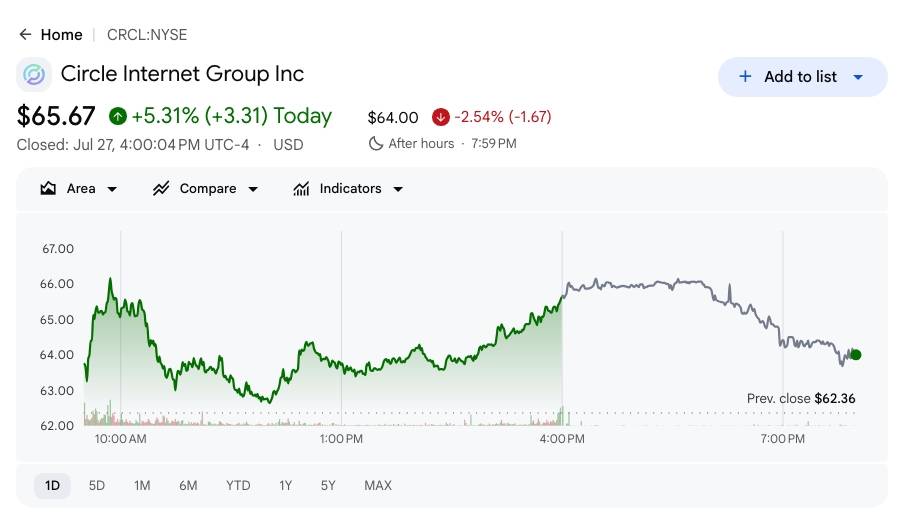
The increase suggests that investors viewed the transaction as a potential strategic advantage, although the long-term financial impact remains difficult to estimate because Circle did not disclose the purchase price, licensing opportunities or expected revenue contribution.
IBM Also Backs the Open USD Stablecoin Initiative
IBM is also listed among the more than 140 companies participating in Open Standard, an industry initiative developing a rival dollar-backed stablecoin called Open USD, or OUSD. The consortium includes Visa, Mastercard, Stripe, Google, BlackRock, Coinbase and other financial, technology and cryptocurrency companies. Open Standard was announced on June 30, but Open USD itself is scheduled to launch later in 2026.
The project plans to return most of the income generated by its reserve assets to companies that adopt and distribute Open USD, after deducting a management fee. This differs from the model used by Circle, which generates a substantial portion of its revenue from the assets backing USDC.
As FORECK.INFO previously examined in its analysis of Circle’s dependence on USDC reserve income, changes in interest rates and competition from alternative stablecoin models can have a significant effect on the company’s financial performance. IBM’s involvement in Open Standard does not necessarily conflict with the patent transaction. Large technology companies frequently maintain commercial relationships with several competing financial platforms at the same time.
Conclusion: The acquisition gives Circle a substantial blockchain patent portfolio covering financial services, enterprise infrastructure and cloud security. It may strengthen the company’s ability to protect and expand USDC, Arc and its broader onchain platform. However, the commercial value of the transaction will remain difficult to assess until Circle provides more information about the individual patents, licensing rights and financial terms.